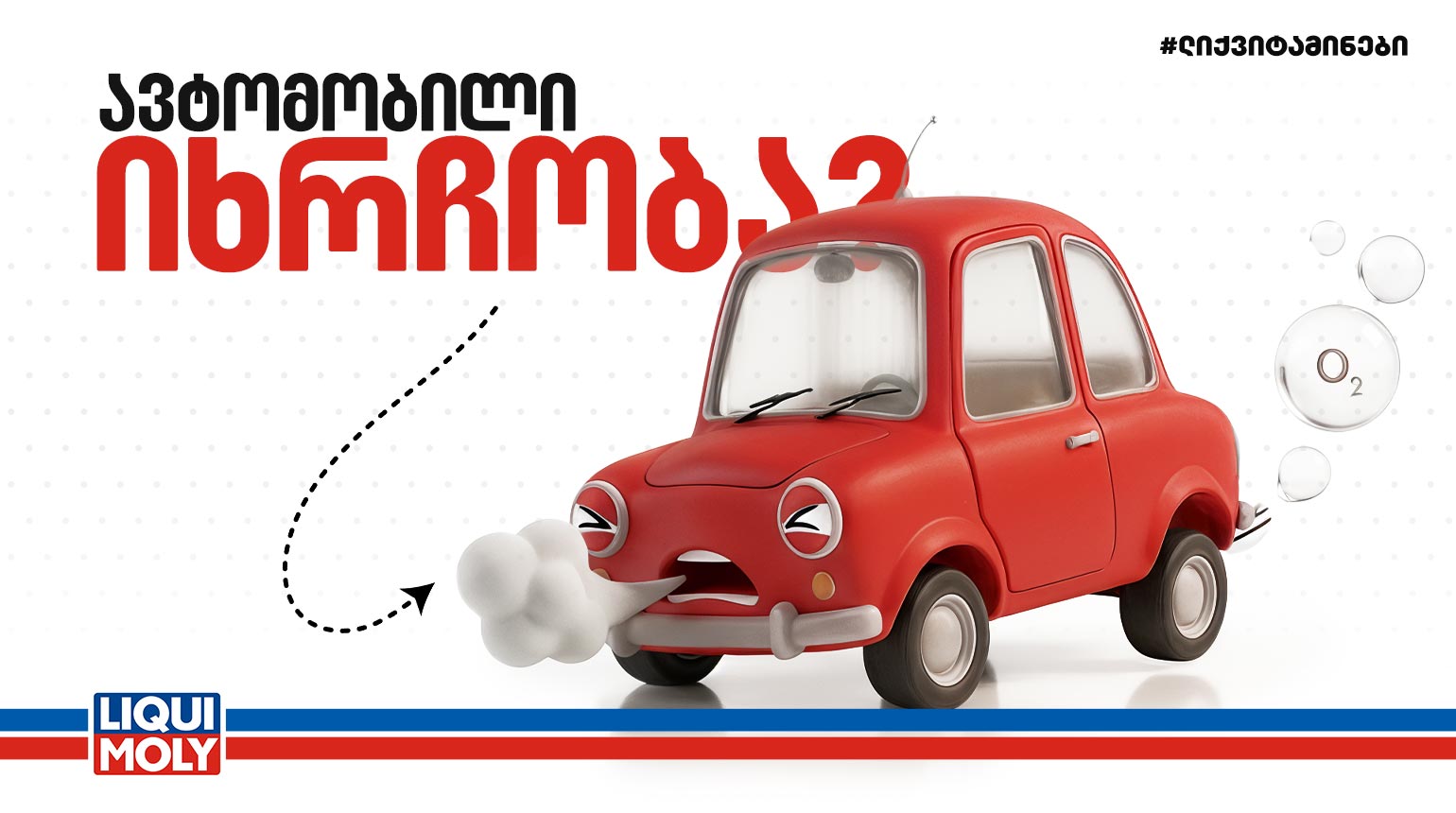
How to Treat Your Engine's "Chronic Bronchitis"
Imagine walking around all day wearing a tight, restrictive mask. With every breath, you feel discomfort; your body lacks oxygen, and your energy drains away. This is exactly how your car's engine feels when its "respiratory system" is clogged—essentially, when the vehicle's "mask" is filthy.
Drivers often don't even notice their car is losing power until the problem reaches a critical limit. Let’s examine the "anatomy" of a vehicle and understand why it needs periodic "medical procedures."
How Does a Car Breathe?
For an engine to generate energy, it needs clean air. If we compare this process to the human body, we get the following picture:
Air Filter — The nose.
Mass Air Flow (MAF) Sensor — The receptors of the nasopharynx.
Throttle Body and Manifold — The vehicle's bronchial tubes.
Combustion Chamber — The lungs, where air must generate energy.
Diagnosis 1: When the Receptors Go "Blind"
At the beginning of the system stands a small but vital detail: the MAF sensor. In the human body, these are your nasal receptors. When you breathe, these nerve endings instantly recognize how much air has entered and at what temperature. This is how we sense stuffiness or polluted air.
If dust and residue accumulate on the MAF sensor, the receptors go "blind." Consequently, the car can no longer receive accurate data and fails to manage air flow correctly.
The Solution: The fix is simple. LIQUI MOLY offers a specialized Air Flow Sensor Cleaner spray. It safely removes dirt and deposits from sensitive sensors without causing damage, restoring them to their original state.
Diagnosis 2: Chronic Bronchitis of the Engine
We fixed the sensor, but what happens next? What if the car has "chronic bronchitis" and its airways are blocked? Let’s move to the main airways—the bronchi. When black deposits (soot) build up in the throttle body and intake manifold, the process is strikingly similar to chronic bronchitis.
Just as phlegm obstructs breathing in humans, carbon buildup narrows the air passage here. The symptoms manifest immediately:
The car starts "coughing" (unstable idling).
The RPM (revolutions) begin to fluctuate.
The vehicle feels significantly underpowered.
The Solution: In this case, a superficial cleaning isn't enough; we need "deep therapy" with a probe. This is where LIQUI MOLY Throttle Valve Cleaner and its specialized long probe come into play.
The procedure resembles a bronchoscopy: we use the probe to go deep into the manifold and clean the intake valves, which can be compared to the lungs. If the "lungs" are clogged, oxygen cannot reach the combustion chamber. The LIQUI MOLY spray dissolves deposits at a molecular level, clearing the path for air. The result is instant: free breathing.
The Result: Instant Recovery
After this procedure, the effects are immediate:
The airways are cleared.
The "bronchi" dilate.
The car breathes again with "full lungs."
Best of all, this is achieved without dismantling the engine! Minimal cost, maximum results—effective "medication" for your vehicle.
The Role of Filters: Vital Organs
Did you know that filters play a leading role in the air supply system?
Air Filter: It ensures that dust, sand, and small particles do not enter the combustion chamber. When it needs replacing, the engine struggles to get clean air, leading to power loss, black smoke from the exhaust, and increased fuel consumption.
Fuel Filter: To use another comparison, this functions like a kidney. Since fuel is rarely perfectly clean, the fuel filter prevents sediment, rust particles, and other harmful substances from entering the system.
Cabin Filter: By changing this, you care for yourself and your passengers. It ensures that the air you breathe inside the cabin is free from dirt and dust.
Don’t wait for your car to break down. Visit GEZ MOTORS, treat your car's respiratory system with LIQUI MOLY professional products, and restore your vehicle's original power.